 By Kalix Poul
Modern horticultural advancements, particularly the development of dwarfing rootstocks, have made it entirely feasible to cultivate productive fruit trees within the average British home. The concept of an indoor edible garden appeals to those seeking a connection with nature, regardless of the weather outside. While the UK climate can be unpredictable, your living room or bright kitchen provides a controlled environment where temperature-sensitive varieties can flourish year-round. This approach does not require vast horticultural knowledge but does demand a pragmatic understanding of light, humidity, and root restriction.
Before you buy fruit trees for an indoor setting, it is vital to consult professional advice regarding the specific limitations of container culture. The growers at CRJ Fruit-Trees suggest that the transition from outdoor to indoor growing involves more than simply placing a pot by a window. They emphasise that successful indoor cultivation relies heavily on managing the “micro-climate” around the tree, ensuring adequate ventilation to prevent fungal issues, and selecting varieties grafted onto rootstocks explicitly designed for restricted growth. According to their guidance on fruit trees for the greenhouse, growing in containers or protected environments like a conservatory allows gardeners to bypass the hardiness issues that plague outdoor plantings, effectively extending the growing season and protecting blossoms from late frosts.
Rootstocks and Container Dynamics
The foundation of any successful indoor fruit tree lies in the rootstock. A common mistake made by enthusiastic beginners is purchasing a standard variety that is genetically programmed to become a large timber tree. For indoor success, the tree must be grafted onto a dwarfing rootstock. This biological restrictor acts as a governor on the tree’s vigour, ensuring that the energy produced by photosynthesis is directed into fruit production rather than excessive wood growth. For apples, the M27 or M9 rootstocks are the industry standard for containers, keeping trees under two metres. For stone fruits like cherries or plums, the Gisela 5 or VVA-1 rootstocks perform a similar function.
When cultivating trees in containers, the pot itself acts as a second limiting factor. A container that is too large can lead to waterlogging and root rot, as the volume of soil holds more moisture than the roots can uptake. Conversely, a pot that is too small will result in a root-bound plant that requires constant watering and feeding. The ideal approach is to pot up gradually. Start with a container that is only slightly larger than the root ball and increase the size in stages over several years. This encourages a dense, fibrous root system capable of supporting a heavy crop. The growing medium is equally critical; garden soil is generally unsuitable for pots as it compacts too easily. A loam-based compost, such as John Innes No. 2 or 3, provides the necessary structure and nutrient retention while maintaining drainage.
The environment inside a home differs significantly from the outdoors. Light levels are lower, humidity is often drastically reduced by central heating, and air circulation is minimal. To mitigate these factors, trees should be placed in the brightest possible location, preferably a south-facing window or a conservatory. Supplemental lighting may be necessary during the darkest winter months to prevent leggy growth. Humidity trays—shallow trays filled with pebbles and water placed under the pot—can create a microclimate of moisture around the foliage without saturating the roots.
The Reliable Meyer Lemon
Citrus trees are perhaps the most iconic indoor fruit trees, and among them, the Meyer lemon stands out as the premier choice for British homes. It is technically a hybrid between a lemon and a mandarin, which gifts it slightly sweeter fruit and, more importantly, a greater tolerance for indoor conditions than true lemons. The Meyer lemon is naturally shrub-like and responds well to pruning, making it easy to maintain a compact shape suitable for a corner of a dining room or a kitchen countertop.
One of the distinct advantages of the Meyer lemon is its ability to flower and fruit simultaneously. It is not uncommon to see waxy white blossoms, small green fruitlets, and ripe yellow lemons on the tree at the same time. This continuous cycle provides visual interest throughout the year. The fragrance of the blossoms is intense and can perfume an entire room, adding a sensory dimension to its presence. However, this tree is a heavy feeder. Because it is active year-round, it requires regular fertilization with a citrus-specific feed high in nitrogen to support foliage and potassium for fruit development.
Watering citrus indoors requires a careful balance. They despise “wet feet,” so the soil must be allowed to dry out slightly between waterings. Yellowing leaves are often a sign of overwatering or a lack of light. If the tree is moved outdoors during the summer—a practice that benefits most indoor fruit trees—the transition must be gradual to avoid shock. Sudden changes in temperature or light intensity can cause the tree to drop its leaves, a condition that, while usually recoverable, sets back fruit production.
The Architectural Fig
The fig tree, particularly varieties like ‘Brown Turkey’ or ‘Petit Negra’, is exceptionally well-suited to container life. In fact, figs often fruit better when their roots are restricted. In the ground, a fig tree will happily send its roots searching for water, producing lush, expansive foliage at the expense of fruit. Confining the roots to a pot simulates the rocky, harsh environments of its Mediterranean origins, stressing the plant just enough to trigger prolific fruiting as a survival mechanism.
Visually, the fig tree is striking. Its large, lobed leaves provide a dramatic, architectural element that complements modern interior design. Unlike citrus, figs are deciduous. They will lose their leaves in winter and enter a dormant phase. This might seem like a drawback for a houseplant, but it actually simplifies care. During dormancy, the tree can be moved to a cooler, darker room, such as an unheated spare bedroom or a garage, provided it does not freeze. This rest period is essential for the tree’s long-term health and ensures a vigorous reawakening in spring.
For indoor growers, the ‘Petit Negra’ variety is particularly appealing as it rarely exceeds a metre in height yet produces full-sized, sweet fruit. Figs require a sunny position to ripen their crop. Without adequate light, the fruit will remain green and flavourless. They are also thirsty plants during the growing season. While the roots should be restricted, the soil within the pot must be kept consistently moist. Mulching the surface of the pot with slate or bark can help retain moisture and regulate soil temperature.
Genetic Dwarf Peaches and Nectarines
Standard peach trees are far too vigorous for the average indoor space, but genetic dwarf varieties have revolutionized the possibilities for indoor stone fruit. Varieties such as ‘Bonanza’ (peach) and ‘Nectarella’ (nectarine) are true genetic dwarfs. They are not merely standard trees grafted onto small rootstocks; their DNA dictates a compact, bushy habit with short internodes (the space between leaves). These trees look almost like bonsai specimens, often reaching only a metre in height after several years.
The aesthetic appeal of these trees in spring is undeniable. Before the leaves fully unfurl, the branches are smothered in vibrant pink blossoms. Since these trees bloom early in the year, growing them indoors protects the flowers from the frost that frequently decimates outdoor crops in the UK. However, this protection comes with a responsibility: pollination. Indoors, there are no bees to do the work. The gardener must step in, using a soft artist’s brush to transfer pollen from flower to flower. This daily ritual during the flowering period is crucial; without it, the fruit will not set.
Despite their small stature, these trees produce normal-sized fruit. The taste of a tree-ripened peach, warm from the sun streaming through a window, is incomparable to the mealy texture of supermarket produce. To support this fruit load, the trees need significant energy. A high-potassium feed, similar to tomato fertilizer, should be applied once the fruit has set. Thinning is also essential. A small tree may attempt to produce dozens of fruits, but this can lead to fruit drop or exhaustion. Removing excess fruitlets to leave one every few inches ensures the remaining peaches reach full size and sweetness.
The Columnar Apple
For those with limited floor space but reasonable vertical height, columnar apples—often referred to as ‘Minarettes’ or ‘Ballerinas’—are the ideal solution. These trees have been bred to grow vertically with very few side branches. They bear fruit on short spurs along the main trunk, creating a pillar of foliage and apples that occupies a footprint little larger than a dinner plate. This growth habit makes them perfect for tight corners or for placing in pairs on either side of a glass door.
Varieties such as ‘Blue Moon’ or ‘Golden Sentinel’ are popular choices. Because they do not spread, they require minimal pruning compared to standard bushy apple trees. The maintenance primarily involves snipping back any side shoots that try to develop in summer to encourage the formation of fruit buds close to the main stem. Like peaches, apples grown indoors will need manual pollination if they flower before the windows can be opened to admit insects. Furthermore, most apples are not self-fertile. You will typically need to buy fruit trees in pairs of different varieties that flower at the same time to ensure cross-pollination, although some self-fertile family trees (with multiple varieties grafted onto one stem) are available.
The challenge with indoor apples is fulfilling their “chill hour” requirement. Most apple varieties need a certain number of hours below 7°C to break dormancy and flower effectively in spring. If the house is kept constantly warm, the tree may fail to wake up properly. The solution is to place the tree in the coolest part of the house during winter, or even place it outside in a sheltered spot for January and February before bringing it back in to force early blooms. This mimics the natural seasonal cycle while still offering protection during the most vulnerable flowering and fruiting stages.
The Calamondin Orange
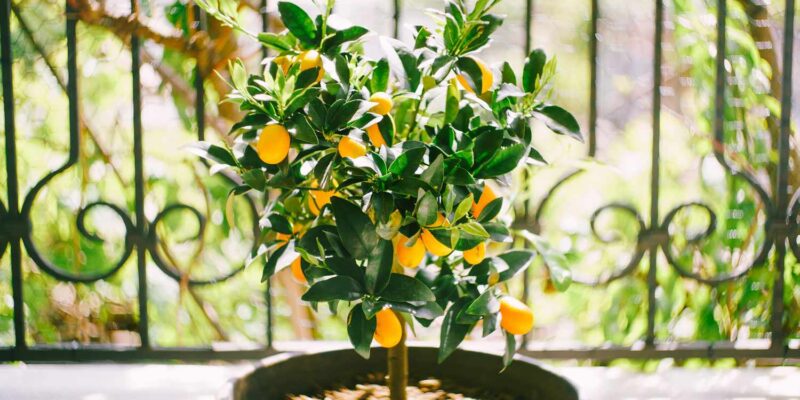
While the Meyer lemon is the most popular citrus, the Calamondin orange is arguably the most resilient. It is practically bulletproof as a houseplant, tolerating lower humidity and less light than other citrus varieties. The Calamondin produces small, tart oranges that are more similar to kumquats in flavour profile. While they are too sour to eat out of hand like a clementine, they are exceptional for marmalades, cooking, or slicing into drinks. The peel is sweet, contrasting with the sour flesh, offering a complex flavour profile.
The Calamondin is highly ornamental. It is a prolific fruiter and can hold fruit on its branches for months without spoiling. A single tree can look like a festive decoration, covered in bright orange orbs. It has a naturally bushy, dense growth habit that requires very little shaping. This density makes it an excellent choice for a visual screen in a bright room. Unlike some other fruit trees that can look straggly if not perfectly cared for, the Calamondin maintains a lush, green appearance with glossy foliage that looks healthy even in the depths of winter.
Care is straightforward: water when the top inch of soil is dry, feed regularly during the growing season, and mist the leaves occasionally. Like all indoor citrus, it is susceptible to scale insects and spider mites, particularly when the central heating dries out the air. Regular inspection of the undersides of leaves and wiping them down with a damp cloth can keep these pests at bay without the need for chemical interventions.
The Arbequina Olive
The olive tree evokes the warmth of the Mediterranean and has become a trendy addition to British interiors. While standard olive trees can grow immense, the ‘Arbequina’ variety is naturally more compact and adapts well to container life. It is also self-fertile and precocious, often bearing fruit at a very young age compared to other cultivars. While the UK climate is generally too cool to ripen olives outdoors reliably, the indoor environment provides the necessary warmth to bring the fruit to maturity.
Olive trees are extremely drought tolerant, making them forgiving for the forgetful waterer. They prefer a sandy, free-draining compost and will suffer quickly if left in sodden soil. The grey-green, silvery foliage offers a softer, more subtle texture than the glossy dark greens of citrus or coffee plants. To get fruit, the olive needs a fluctuating temperature; a consistent 20°C year-round can sometimes inhibit fruiting. A cool period in winter (around 10-12°C) is beneficial.
Processing the fruit is an adventure in itself. Fresh olives are incredibly bitter and must be cured in brine or salt for weeks before they are edible. However, for many indoor gardeners, the fruit is secondary to the aesthetic value of the tree. The gnarled bark that develops even on young trees gives them a sense of age and permanence that few other houseplants can offer. They respond well to pruning and can be shaped into standard “lollipop” forms or kept as loose bushes.
Dwarf Pomegranate
The pomegranate is a symbol of abundance, and the dwarf variety Punica granatum ‘Nana’ brings this symbolism into a manageable scale. Unlike the massive outdoor shrubs grown in Spain or California, the dwarf pomegranate grows to only about a metre tall. It is prized not just for its fruit, but for its stunning trumpet-shaped orange-red flowers that appear in summer. These are followed by miniature pomegranates that are roughly the size of a golf ball or a tennis ball.
The fruit of the dwarf pomegranate is edible, though the seeds are smaller and sometimes tarter than commercial varieties. Nevertheless, they are packed with juice and flavour. The tree loves heat and light. It is one of the few indoor plants that will thrive in direct, scorching sunlight through a south-facing window. In fact, without intense light, it will not bloom.
Pomegranates are semi-deciduous depending on the temperature. In a warm home, they may keep their leaves, but often they will drop them in winter. This is natural. They are relatively pest-free compared to citrus and are long-lived. The dwarf pomegranate also lends itself well to bonsai training, allowing for artistic expression alongside fruit production.
Strategic Care for Indoor Success
Cultivating these trees requires a shift in mindset from standard houseplant care. The primary challenge is light. Human eyes adapt to low light, making a room feel bright when, photosynthetically speaking, it is a cave. Placing trees within a metre of a large window is non-negotiable for fruit production. Rotating the pot a quarter turn every week ensures even growth; otherwise, the tree will lean heavily towards the light source.
Feeding is the second pillar of success. A tree growing in a pot has no access to nutrients other than what you provide. A controlled-release fertilizer mixed into the soil in spring provides a baseline, but liquid feeding during the active growing and fruiting season is necessary to sustain the crop. Seaweed extracts are excellent for general health, providing trace elements that synthetic fertilizers often miss.
Finally, one must consider the reality of purchasing these plants. When you decide to buy fruit trees for indoor use, timing is important. Buying in spring allows the tree to acclimatize to your home during the months when natural light levels are increasing. Purchasing in the depths of winter can be a shock to a plant that may have been kept in a nursery greenhouse. Inspecting the plant for pests before bringing it inside is also critical; introducing spider mites or aphids into a closed indoor environment can lead to a rapid infestation. With the right selection and a bit of dedication, however, the joy of harvesting a lemon for your gin and tonic or a fresh fig for breakfast, right from your living room, is an attainable luxury.